

Everyone wants to be on the cutting edge of fashion; always looking for the latest and greatest designs in order to be one step ahead of everyone else. Sometimes the hottest creations actually are recycled ideas from the past or from other lands. Like the song says “everything old is new again”.
We often see beautiful screens in Japanese restaurants. The décor attracts us because of its clean simple lines. Japanese abodes have an airy look relieving the mind of unnecessary clutter. With all of the accessories that we accumulate, we long for the openness of Japan’s clean designs. Shoji screens are traditional Japanese rice-paper screens, in wooden frames, used as sliding partitions and doors in Japanese homes. These can easily be incorporated into our interior designs.

One way to achieve simplicity is to borrow design ideas from other countries; morphing them into a unique décor of your own. Shoji screens provide privacy while letting filtered light through. Our standard doors and shutters must have a massive frame in order to support them. The Japanese believe in all parts working and flowing together. Think Feng Shui. Instead of requiring a frame, the concept of Shoji is solely based on all of its parts working together.
Shoji screens can be used as a window treatment. They are great to use as room dividers or as a simple partition for privacy. They present a pretty and light look giving a great alternative to heavy fabrics or standard blinds. Traditional Shoji screens use rice paper with a single grid frame applied to one side. The grid is seen on the inside of the room while the paper and shadow of the grid is visible from outside of the room. They can be attached to the ceiling and used as sliding panels or can be made as a free standing folding screen.
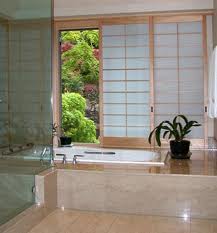
We have taken the traditional Shoji screen and made some slight design changes to fit into our western décor. Fiberglass synskin is often used instead of rice paper. Shoji Plastic Synskin is a fiberglass material with the look of rice paper but with a much higher strength. It is ideal for shoji screens or any application where the look of rice paper is desired. In place of a single frame on one side, our screens are designed with the paper sandwiched in the center of frames on either side. This creates a finished appearance from both sides.
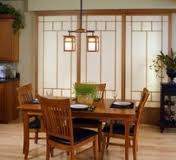
Shoji screens can be framed with simple grids or with a more interesting pattern. The outer frame is 1 ¼” to 1 ¾” thick. The grid work is called Kumiko. It is made from strips of cedar wood typically ¼” to ½” in size. They are joined using precision with half lap joints. When the paper or synskin is added it makes it a sheer, but strong panel. Painting a tree or scene on the screen can provide color and beauty, while making it a work of art.
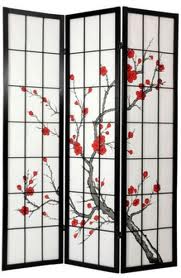
Shoji screens can be made by creative do-it-yourselfers. The free standing divider panels can be found at very reasonable prices. Custom made partitions and window treatments can be found at Noble Interiors http://bestshoji.com/index.html. Shoji influenced lighting fixtures can be a nice accessory to use for the décor as well.

May your new Shoji screen bring to your abode some more, well deserved, peace. Never be afraid to dance!
show me your support and subscribe to this blog, sign in under email subscription at the top of the column on the blog’s right side. I promise you will have fun following me.
Read and subscribe to my articles written for the New York Examiner.
Be sure to subscribe to my National Interior Decorating articles as well.
Visit me at my website, weberlifedesign.com
 weberlifedesignspeaks✦com
Outstanding
Thanks for the write up
I love these screens! I feel like I could never figure out where to actually use them in real life that would look as pretty as they do in these homes.
Outstanding